











Technology continues to shape the Australian healthcare sector, creating opportunities to improve clinical documentation, streamline administrative processes and support healthcare professionals in managing their workloads. Speech recognition enables clinicians to create clinical documentation using spoken input rather than relying entirely on manual typing.
Clinician Workload and the Challenge of Clinical Documentation
Clinical documentation is an essential part of healthcare delivery, supporting continuity of care, communication between professionals and accurate record-keeping. However, the time required to complete reports, correspondence and other administrative tasks can add to the demands already facing clinicians.
Mental Health Australia’s Annual Healthcare Professionals Survey has highlighted concerns about the wellbeing of healthcare professionals. Its 2022 findings reported high levels of burnout among respondents, reflecting the importance of addressing workplace pressures and supporting the sustainability of the healthcare workforce.
While clinician burnout has multiple contributing factors, reviewing administrative processes and documentation workflows is one area healthcare organisations can consider when looking for opportunities to reduce unnecessary workload.
The Role of Speech Recognition in Clinical Documentation
Speech recognition allows healthcare professionals to dictate clinical information rather than enter every word manually. When combined with appropriate documentation and workflow management tools, it can support the creation, processing and circulation of clinical reports and correspondence.
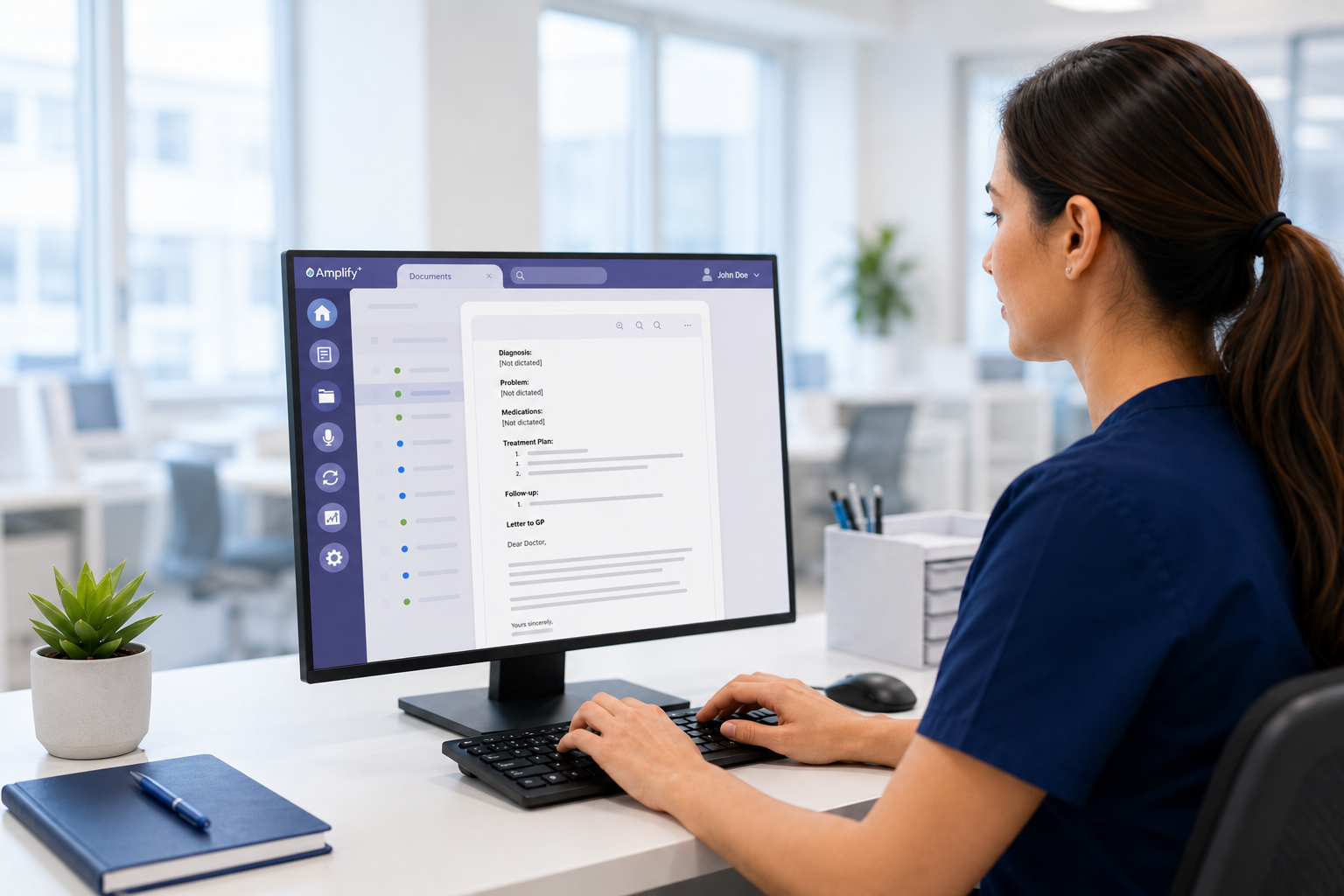
Amplify+ supports clinical documentation and correspondence workflows, helping healthcare teams manage the process from report creation through to review and circulation. By supporting multiple stages of the documentation workflow, Amplify+ can help organisations take a more structured approach to handling clinical information and administrative tasks.
The potential benefits of speech recognition and workflow management include:
1. Supporting More Efficient Documentation
Dictation provides an alternative to typing clinical information manually. Depending on the clinician’s workflow, the complexity of the documentation and the level of review required, speech recognition may help reduce the time spent producing reports and correspondence.
By reviewing existing documentation processes and introducing appropriate tools, healthcare organisations can identify opportunities to simplify repetitive administrative tasks and make better use of clinicians’ time.
2. Supporting Consistent and Accurate Records
Accurate clinical documentation is essential for effective communication and continuity of care. Speech recognition can assist with capturing dictated information, while structured templates and appropriate review processes can help support consistency.
As with any documentation technology, transcription outputs should be checked by the responsible healthcare professional to ensure that clinical terminology, patient details and the intended meaning have been captured correctly.
3. Helping Manage Administrative Workload
Documentation is only one aspect of a clinician’s responsibilities, but it can take time away from other professional activities. Improving how reports and correspondence are created, processed, reviewed and circulated may help healthcare teams manage their administrative workload more effectively.
Technology alone cannot resolve clinician burnout, which is influenced by a range of organisational and workplace factors. However, reviewing documentation processes can be one practical step towards identifying avoidable administrative burdens and supporting more manageable workflows.
4. Improving Documentation and Correspondence Workflows
Clinical reporting involves more than capturing spoken words. Depending on an organisation’s requirements, it may also involve preparing documents, working with templates, reviewing information and circulating completed correspondence.
Workflow management tools can help organise these stages and provide a more structured approach to handling documentation. Amplify+ supports clinical documentation and correspondence workflows, offering healthcare teams a solution to explore when reviewing how these processes are managed.
Available integration options and workflow capabilities will depend on the organisation’s existing systems, technical requirements and implementation arrangements.
Looking Ahead: Clinical Documentation in Australian Healthcare
As healthcare organisations continue to respond to growing service demands and increasingly complex care requirements, efficient documentation processes remain an important operational consideration.
Speech recognition and workflow management technologies offer options for reviewing how clinical information is captured, processed and communicated. Their suitability will depend on the needs of individual healthcare teams, the accuracy and governance requirements of their documentation, and how the technology fits within existing workflows.
Prescribe Digital’s Amplify+ supports clinical documentation and correspondence workflows, helping healthcare organisations explore ways to manage reporting and administrative processes more effectively.
Interested in improving your clinical documentation workflows? Explore Amplify+ to learn more about its capabilities, or book a demonstration to discuss how it could fit your organisation’s requirements.
